Immersive and Interactive
Yasmine Laraqui assembles a triptych of interconnected works — Themiscity, Peeparabieh, and Immervise 1 — that together explore the tension between architectural form, immersive space, and the boundaries between public and private, real and virtual.
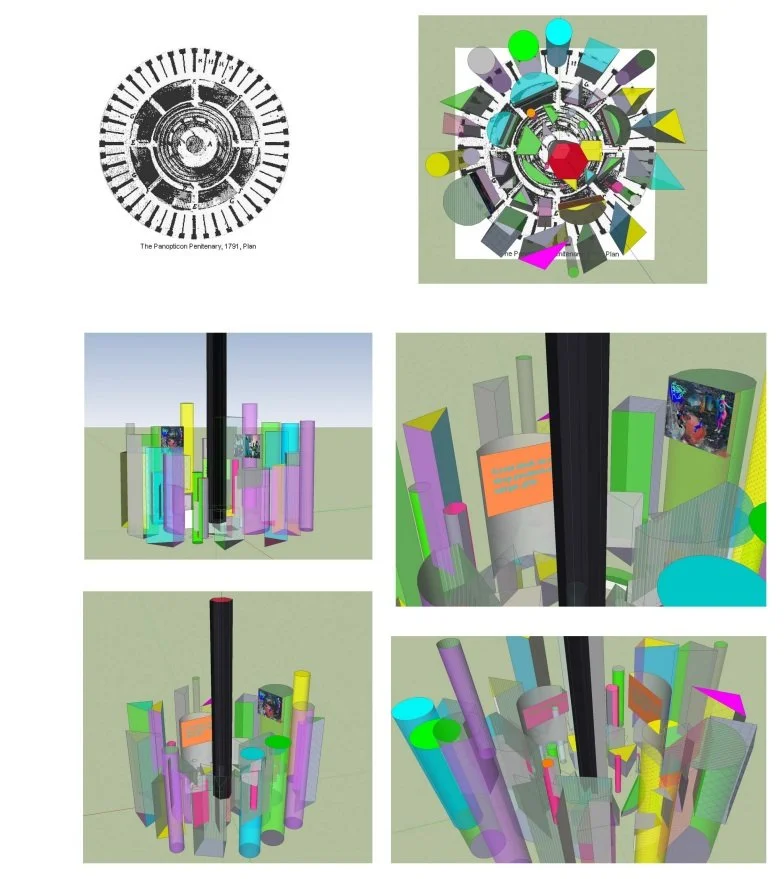
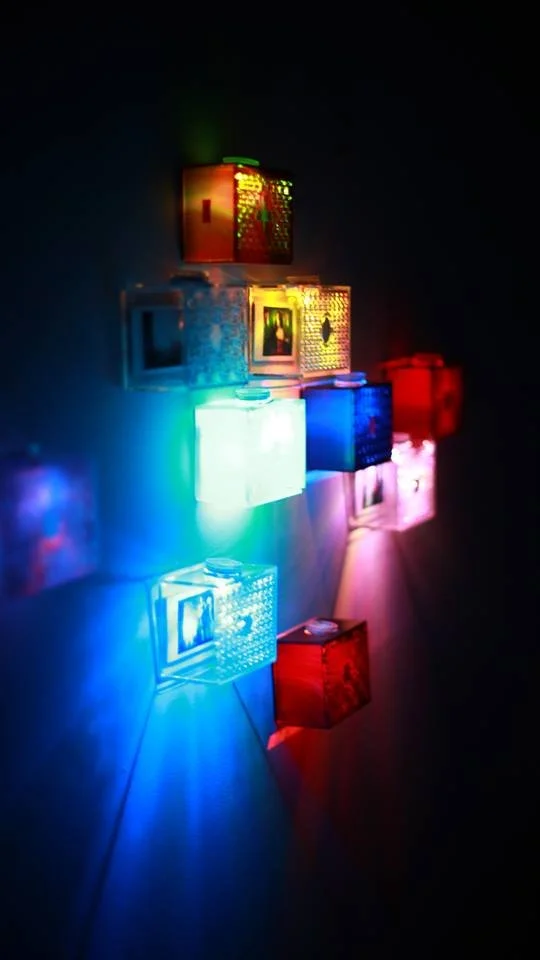
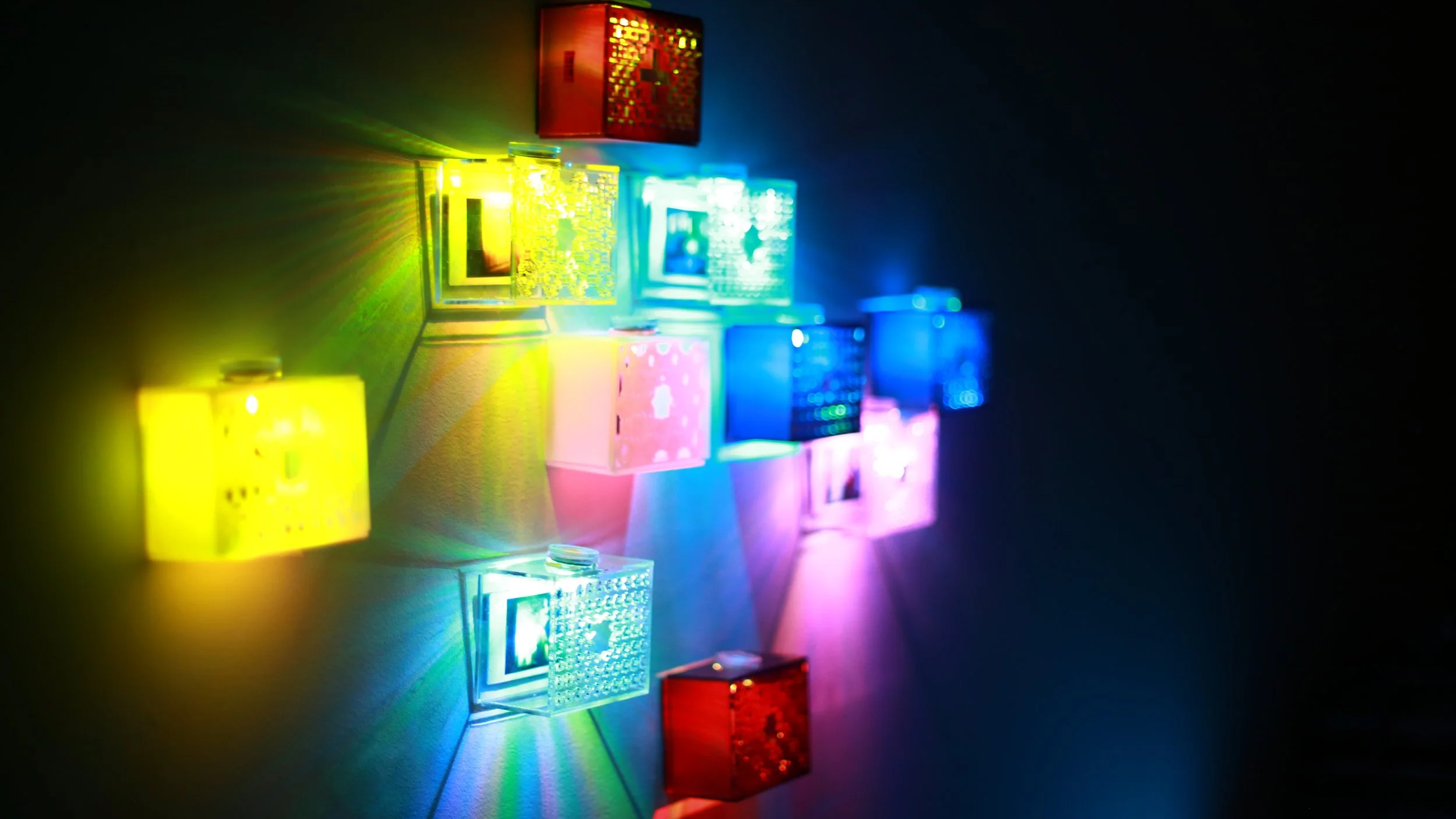
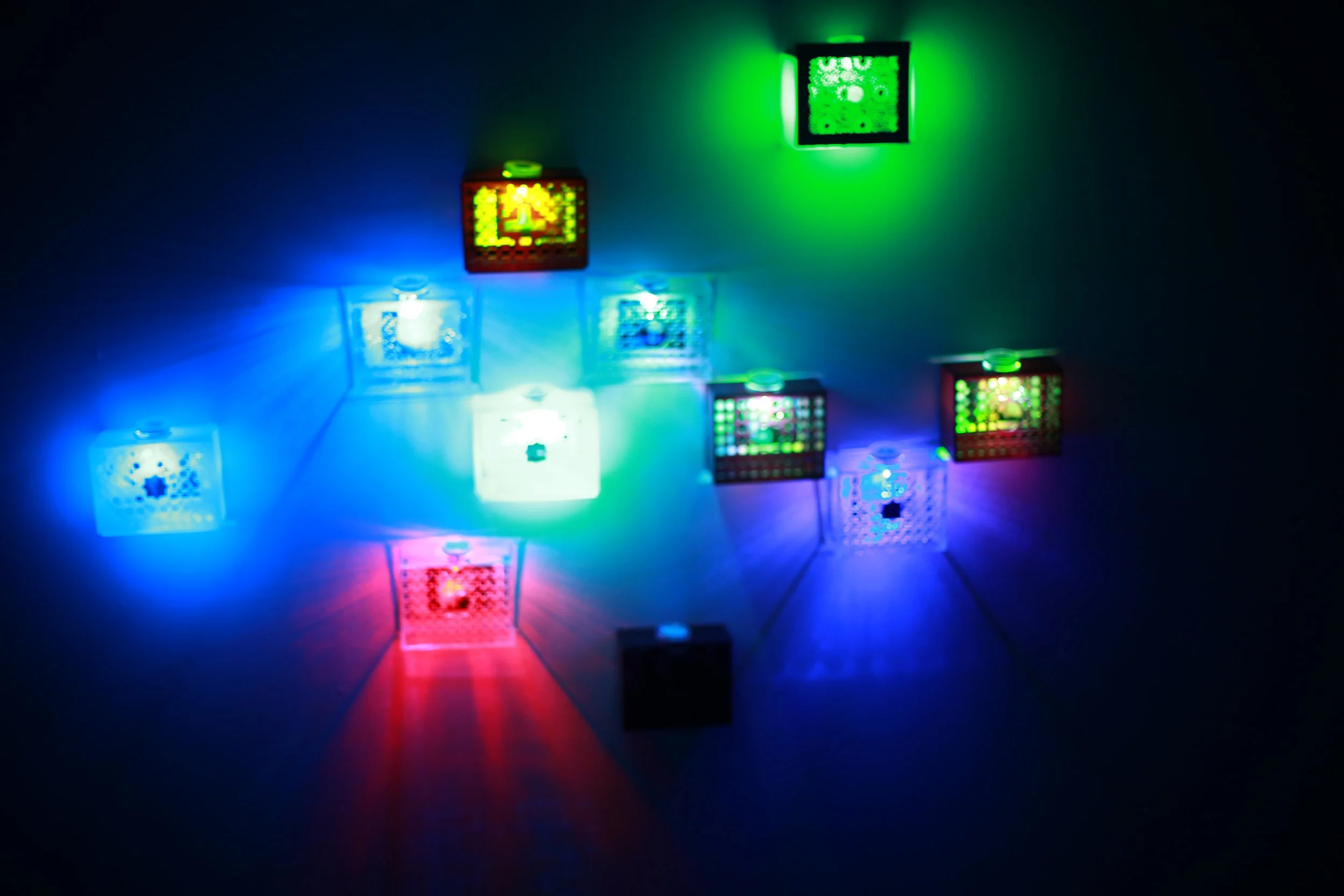
Themiscity evokes an urban dreamscape. The glowing cubes mounted on a dark wall suggest both a night skyline and a digital city, where geometry, light, and shadow converge into a surreal architectural fabric. The piece feels less like a static façade than a living organism — a city that breathes through its luminous structures.
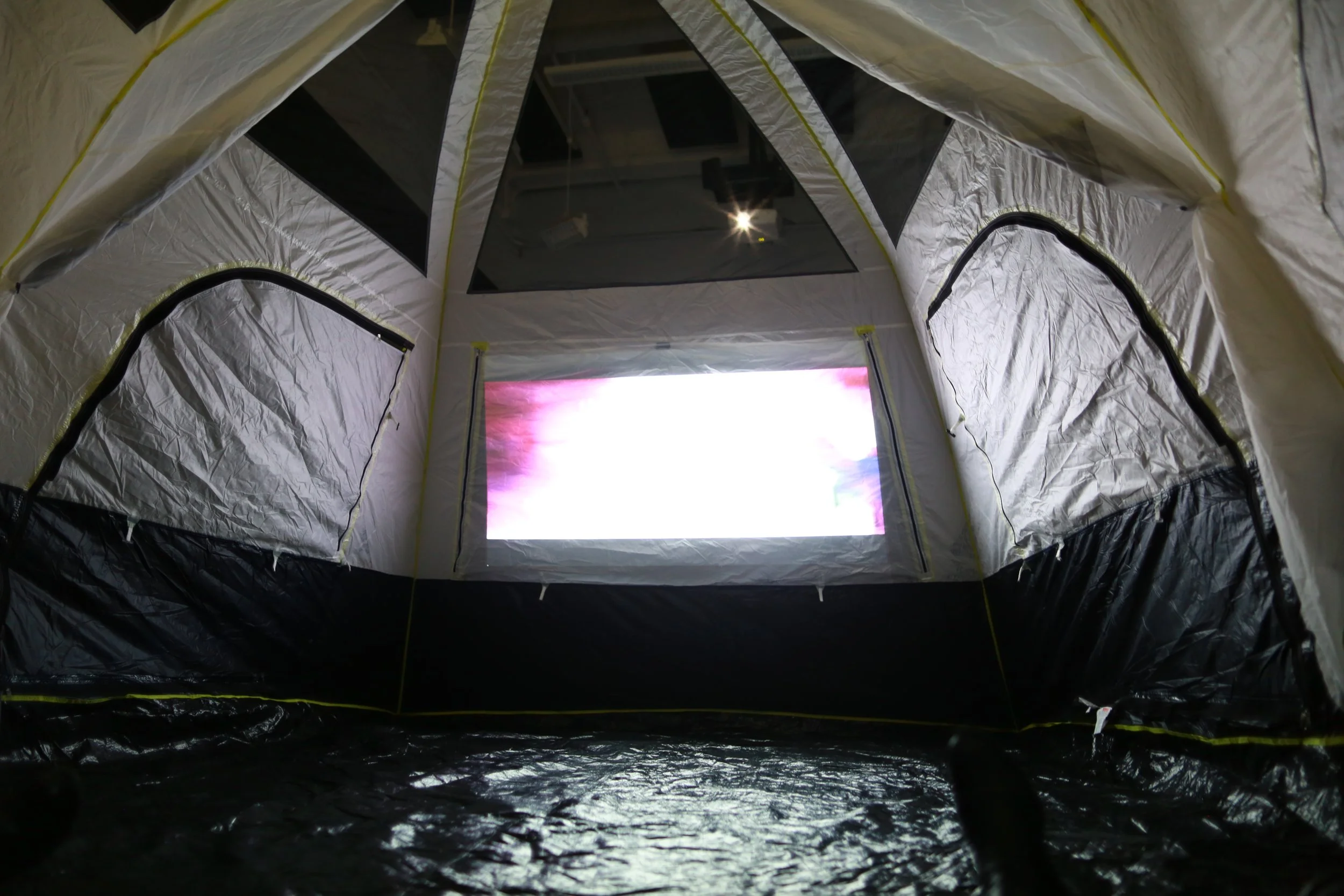
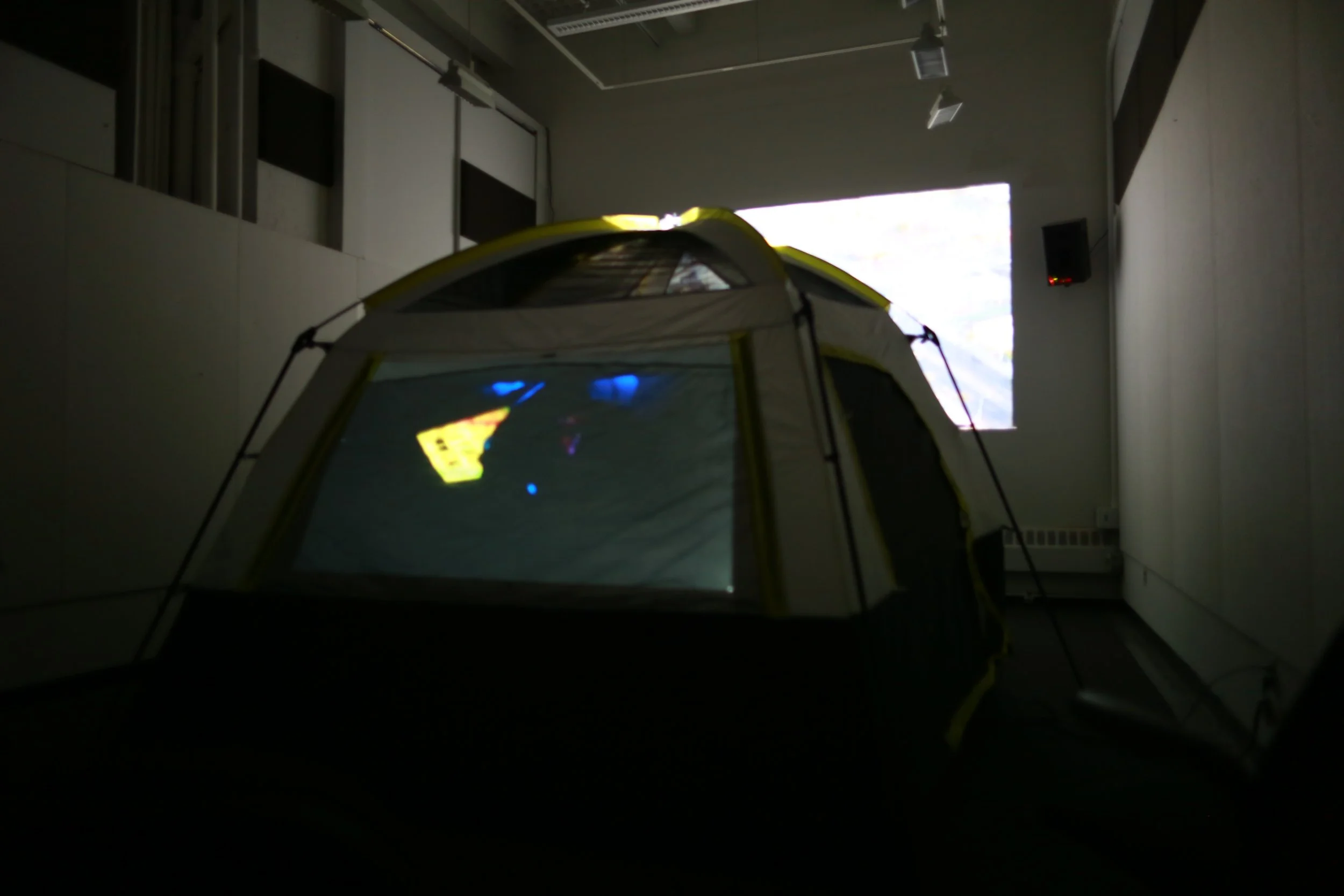
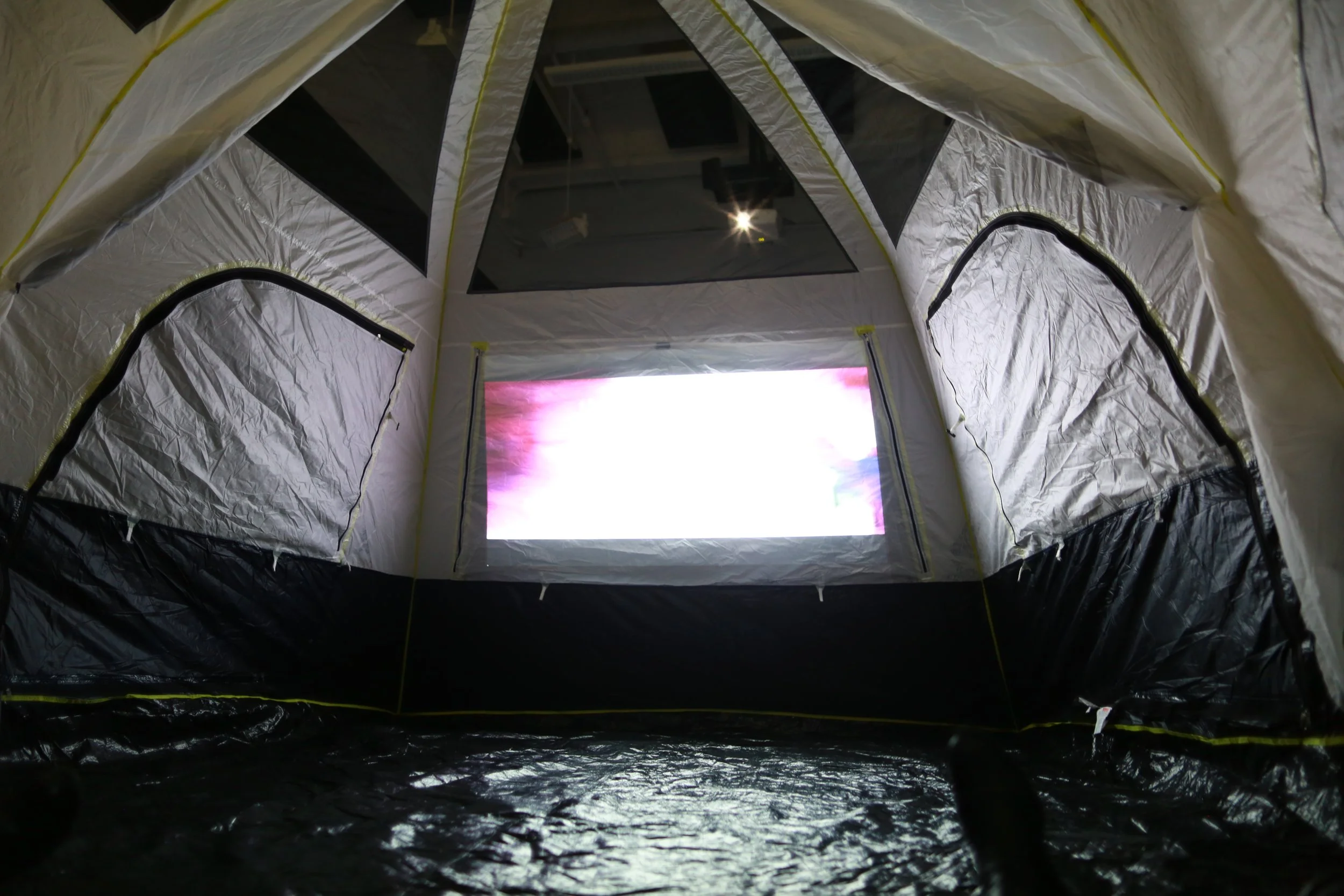
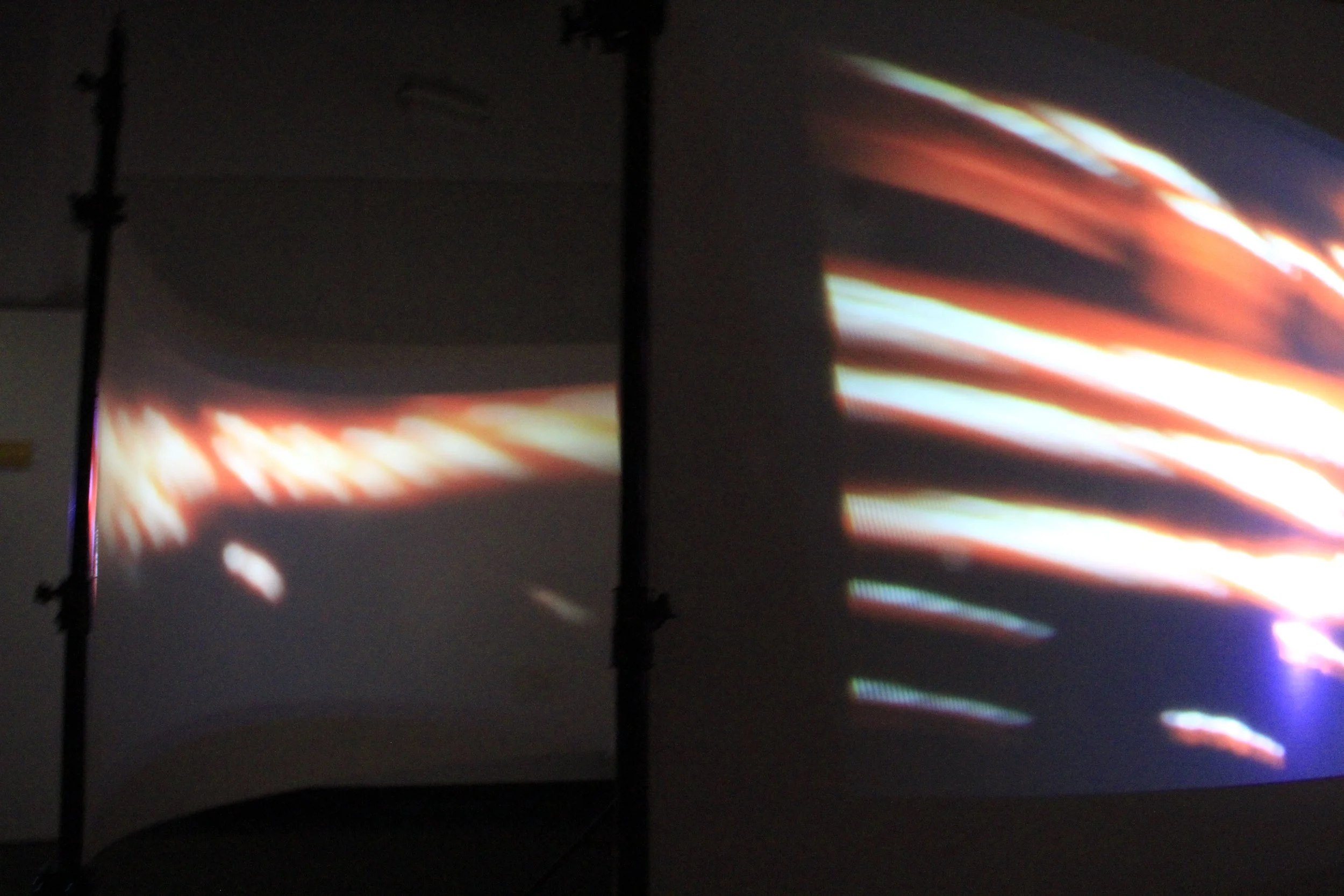
Moving inward, Peeparabieh juxtaposes tradition and technology. By placing an LED screen inside the intimate, domestic archetype of a camping tent, Laraqui collapses the distinction between the real and the projected, the protected and the exposed. The work alludes to the concept of the moucharabieh (or "mashrabiya"), traditional latticed architecture that both conceals and reveals. Here, the tent becomes a temporary architecture: a mobile, private observatory for watching images, reflections, perhaps even the self.
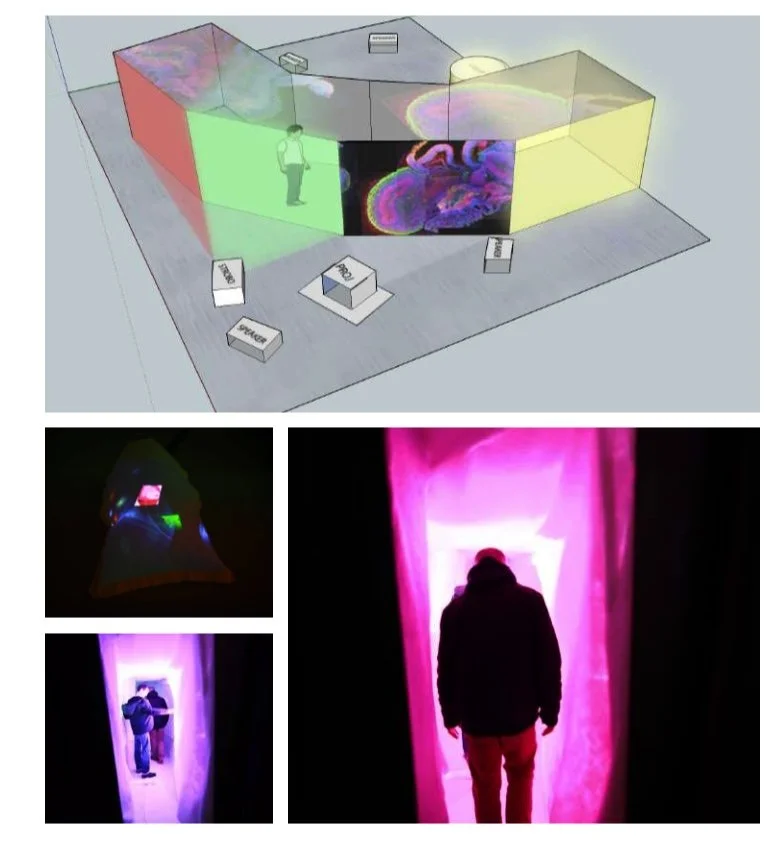
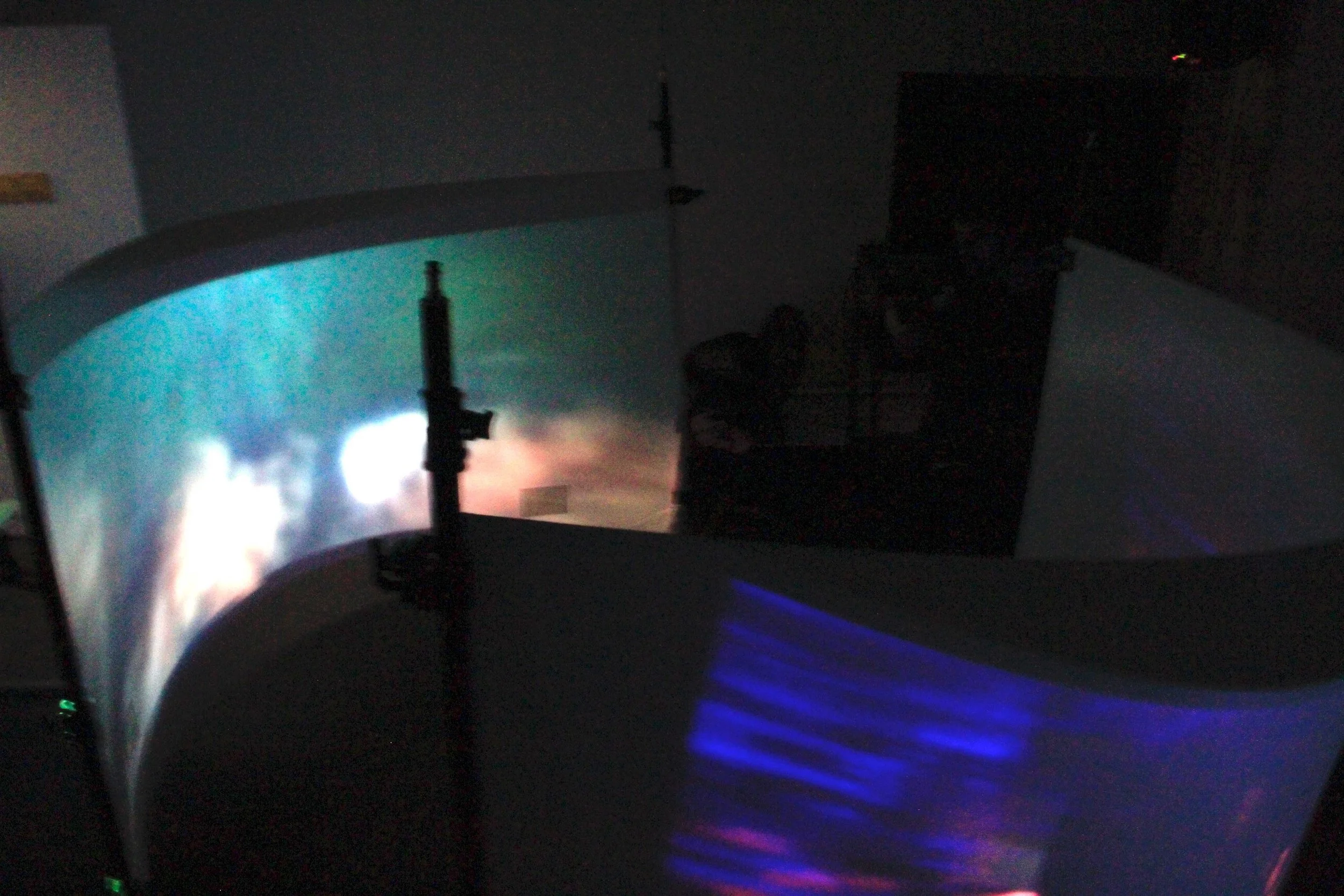
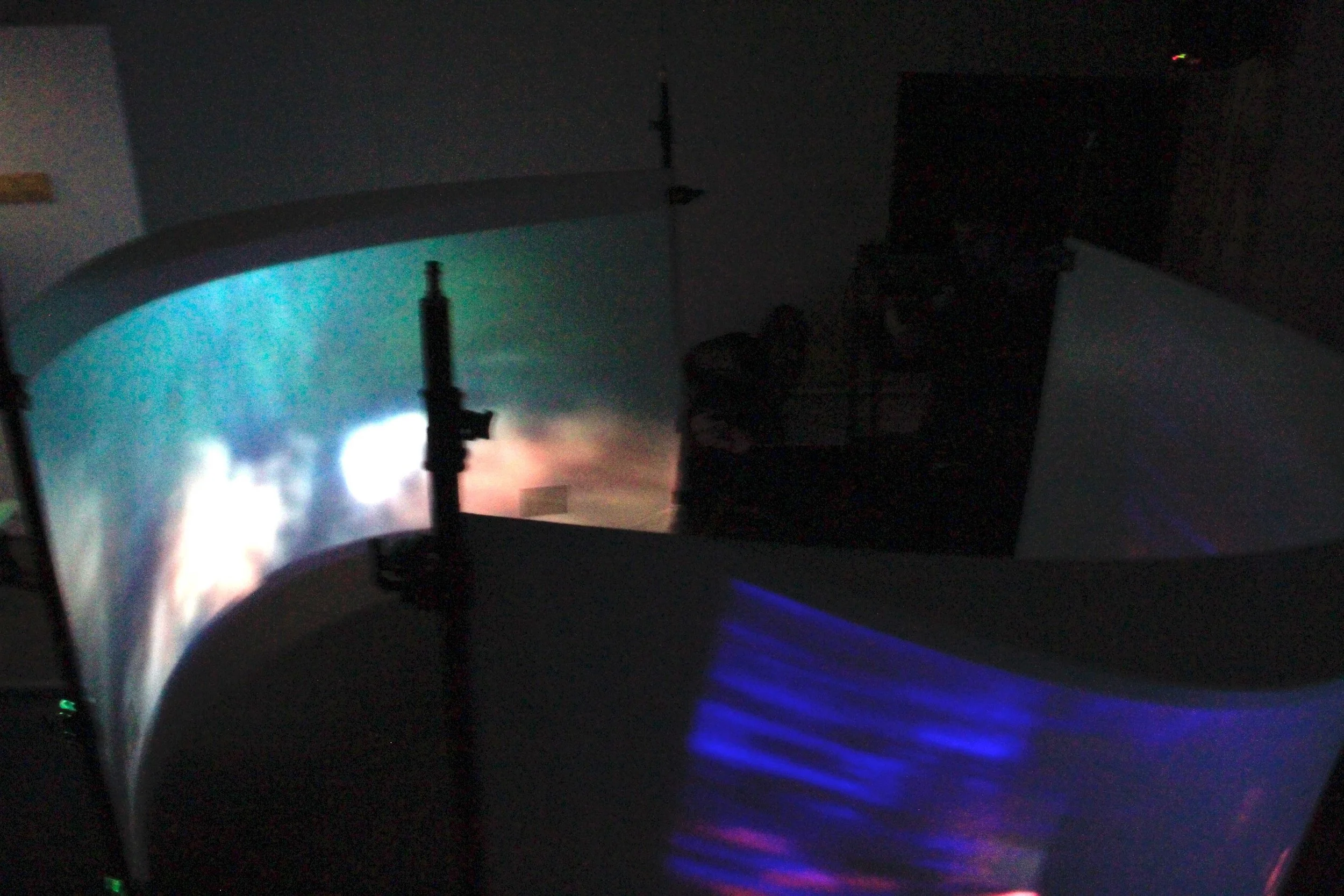
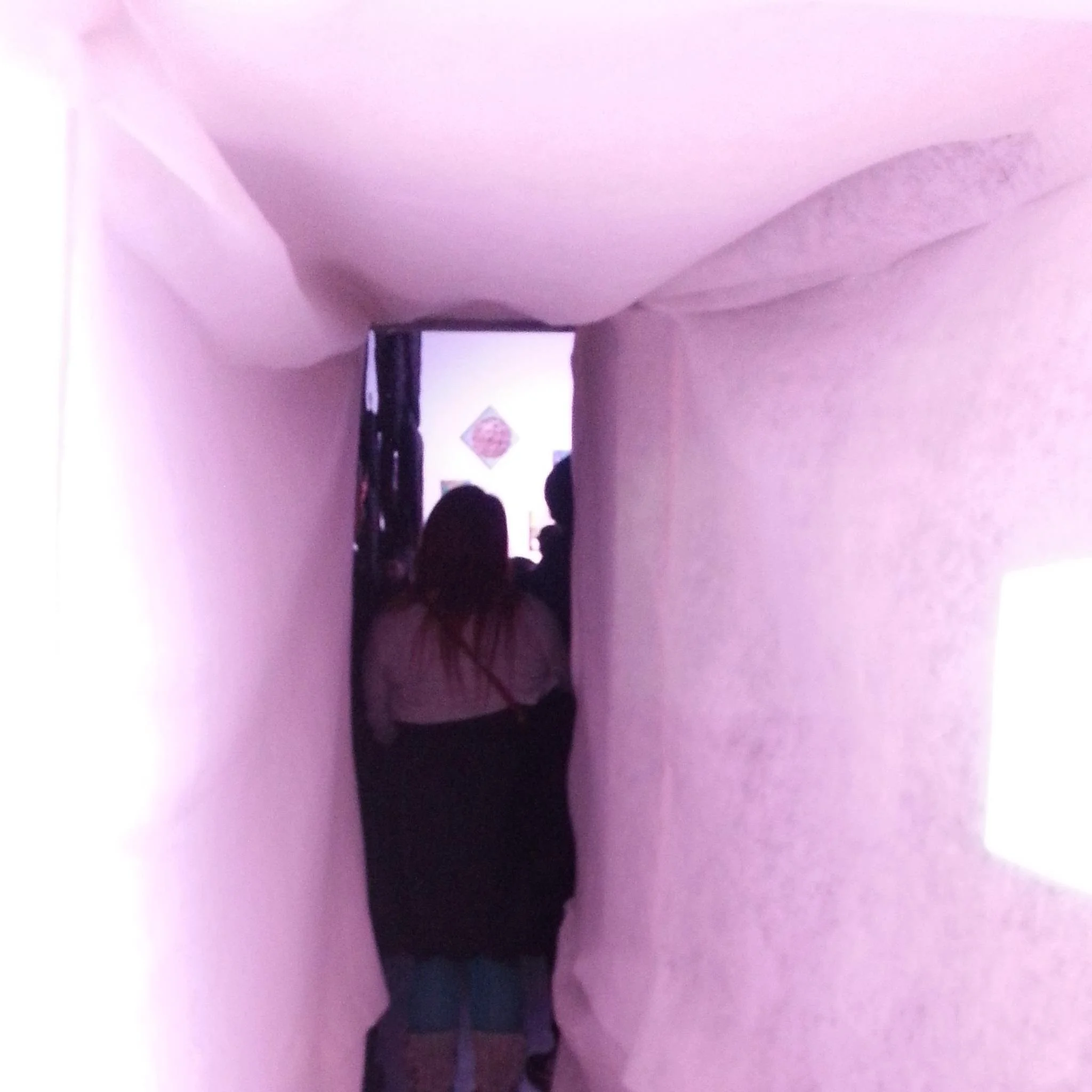
Finally, Immervise 1 brings us full circle into a fully immersive environment — a curved, interactive gallery space bathed in pink light. The rendered diagram and the glowing tunnels invite viewers to walk through, to be enveloped by color, form, and sound (implied), entering a liminal space that is neither fully physical nor wholly virtual.
Taken together, these three works chart a conceptual journey: from the macrocosm of an imagined city, through the microcosm of intimate refuge, into a transformed spatial experience. Laraqui’s General-5 proposes architecture not just as structure, but as narrative — a way to tell stories about how we inhabit, project, and reshape our environments. It is a meditation on modern life’s fluidity: of identity, space, and the increasingly porous boundaries between them.
Take a minute to read about the art
La dictature de l’algorithme 2017 - débat
Nabil Byahya - Kenza Amrouk - Artalk - Yasmine Laraqui à Dasthe Art, Casablanca
Ce débat explore comment les algorithmes façonnent notre rapport au monde, orientent l’accès à l’information et influencent silencieusement nos décisions. Les intervenants analysent la manière dont les plateformes numériques créent des bulles de perception, hiérarchisent les contenus et produisent une forme de contrôle invisible.
Ils montrent comment cette « dictature algorithmique » affecte la pensée critique, la diversité des voix et la construction identitaire, particulièrement dans les espaces culturels et sociaux du monde arabe. Le débat souligne l’urgence de comprendre ces mécanismes pour reprendre une forme d’autonomie intellectuelle et développer une approche plus consciente, plus éthique et plus libre de l’espace numérique.
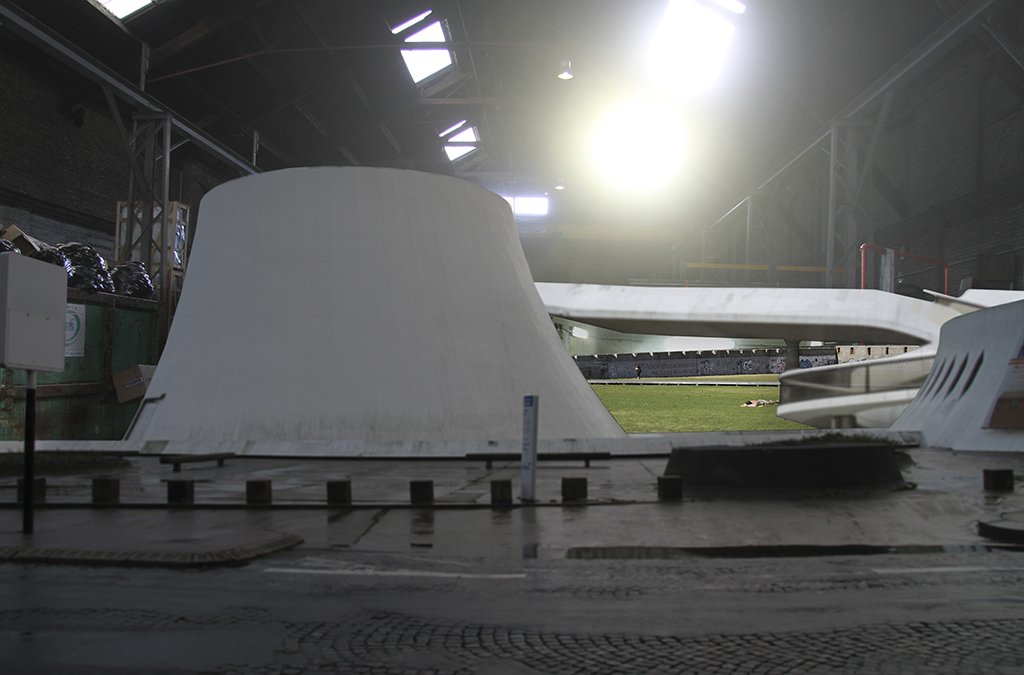
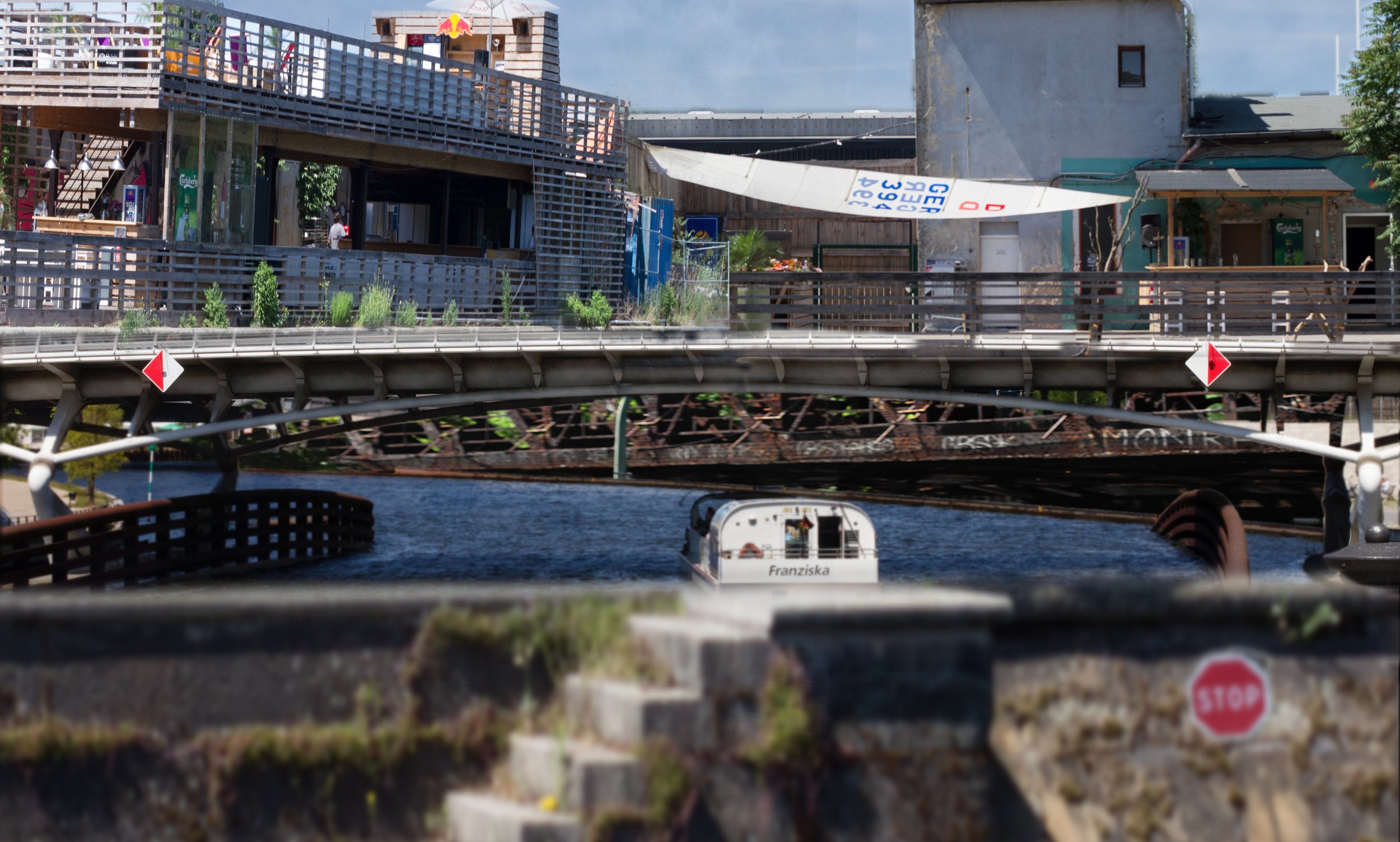
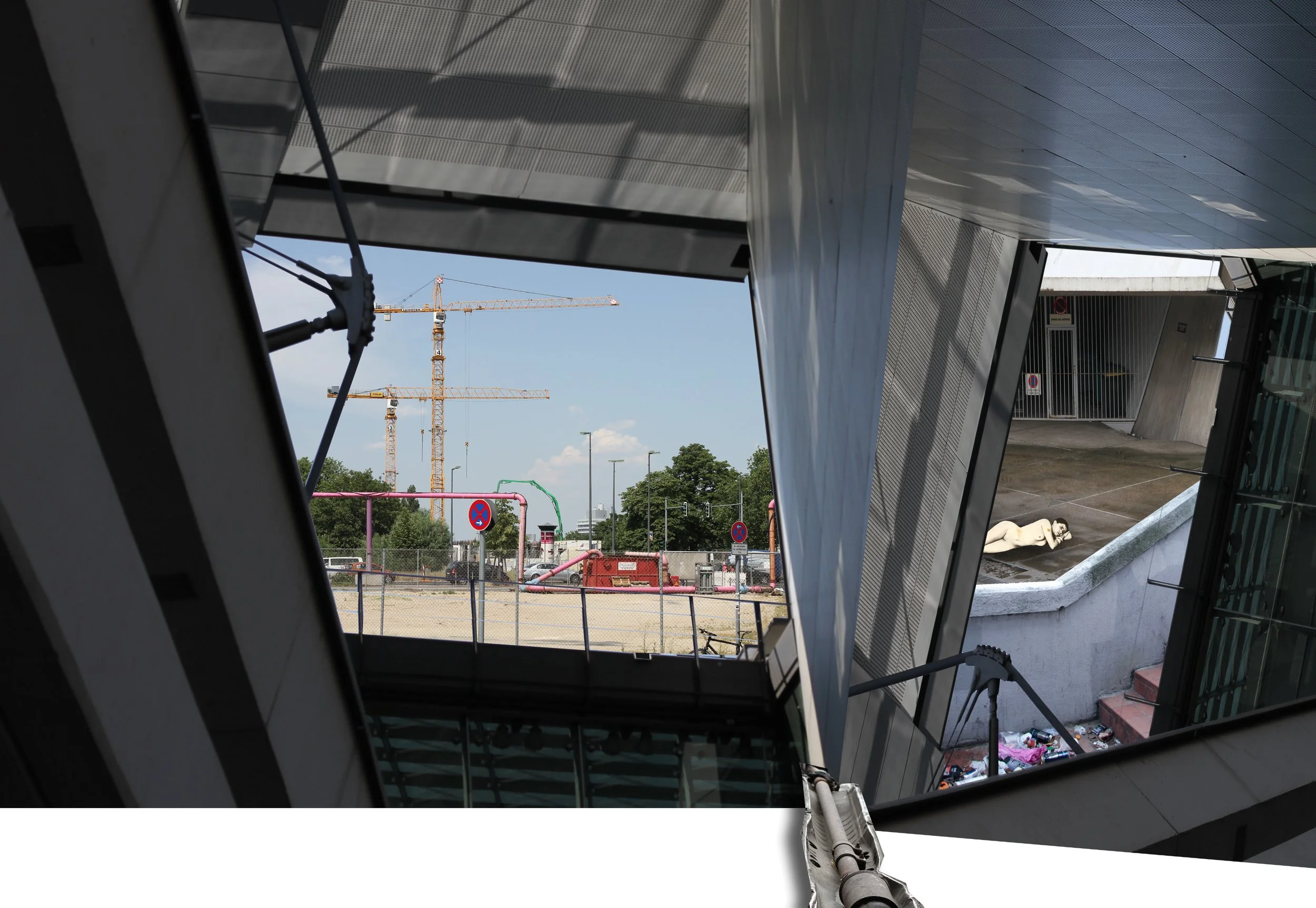
Impossible Space Photo Series
Impossible Space is a photographic exploration of environments that defy conventional geometry and perceptual expectation. The series constructs scenes where scale, perspective, and light collide to produce interiors and exteriors that feel both eerily familiar and quietly unreal. Each image acts as a visual puzzle: staircases that lead nowhere, rooms that fold into themselves, doorways opening onto impossible vistas, and architectural elements suspended in ambiguous gravity.
Aesthetic and Technique
Composition centers on strong linear elements and negative space to emphasize dislocation. Angles are deliberately skewed; vanishing points are shifted or multiplied to unsettle normal depth cues.
Lighting alternates between clinical clarity and soft, diffuse twilight. Harsh directional light carves clean edges and reveals texture, while moody ambient light erases scale and blurs boundaries between planes.
Color palettes range from muted neutrals—with concrete grays, off-whites, and weathered browns—to strategic bursts of saturated hue that anchor the eye and create emotional counterpoints.
Post-production blends photographic realism with subtle digital manipulation. Layers are composited to remove obvious seams; shadows and reflections are adjusted to sustain the illusion without breaking photographic believability.
Concept and Themes
Perception vs. Reality: The images question how visual cues shape our understanding of physical space and how easily that understanding can be disrupted.
Memory and Architecture: Spaces carry traces of human presence even when absent. Worn surfaces, stray objects, and architectural details evoke stories that never fully resolve.
Liminality: Thresholds—corridors, stairways, doorways—are recurring motifs, suggesting transition, uncertainty, and the psychological tension of in-between places.
Gravity and Orientation: By altering expected orientation and spatial relationships, the series invites viewers to reconsider bodily assumptions about movement and balance.
Viewer Experience The series is designed to be experienced both as individual photographs and as a contiguous narrative. Up close, viewers can trace material detail and compositional craft; from a distance, shapes and rhythms form a more abstract architecture of mood. Viewers often report a mild cognitive dissonance: an impulse to map familiar logic onto an image while simultaneously recognizing that logic’s failure. That tension is the work’s intended engine.
Presentation Impossible Space translates well across formats: gallery prints on matte paper to emphasize texture, large-scale installations that immerse the viewer, or mixed-media displays combining soundscapes and projection to heighten disorientation. Each presentation seeks to preserve the delicate balance between photographic truth and imagined structure.
About the Maker Created by Yasmine Laraqui - ARTIST STUDIO, Impossible Space extends the studio’s interest in visual storytelling and multimedia design. The series merges fine-art photography with spatial design principles to push the boundaries of how architecture and narrative intersect in still images.
Contact for exhibition inquiries, licensing, or commissioned variations of the series can be arranged through the studio.